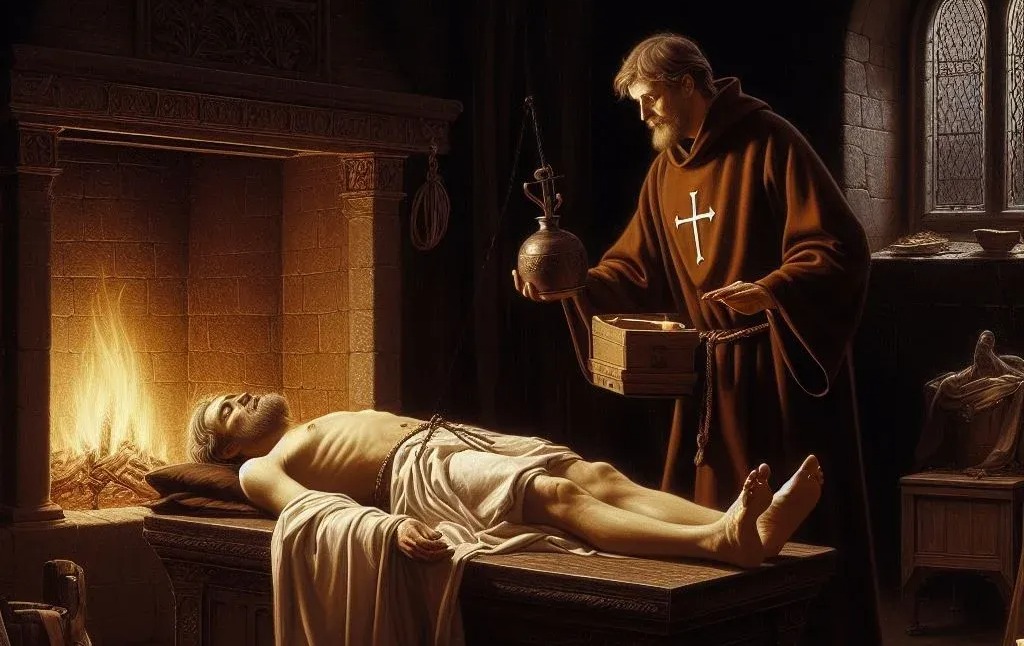
According to tradition, on March 16, 1345, one of the most remarkable events in the history of Amsterdam took place: the famous Miracle of Amsterdam. Following this extraordinary event, the city became an important pilgrimage destination, and a rich religious tradition developed around what came to be known as the Holy Stede, or the Chapel of the Holy Place.
At Flying Carpet Amsterdam, we offer visitors the opportunity to see the site of this historic event during selected guided tours of Amsterdam for those interested in the city’s spiritual and cultural heritage.
The tradition tells of a dying man who, after receiving the Eucharist from a priest, vomited the consecrated Host along with the food he had previously eaten. The Eucharist—also known as Holy Communion—is a sacred wafer of bread given in the Christian tradition as a remembrance of the Last Supper of Jesus Christ.
The man had received what is known as Viaticum, a special rite in the Roman Catholic Church in which Holy Communion is administered to those who are near death as spiritual nourishment for their final journey.
Following the customs and regulations of the Church at the time, the caregiver took the vomit, including the consecrated Host, and placed it in the household fireplace. This was considered the proper method for respectfully disposing of material containing the Eucharist.
The next morning, when the family attempted to rekindle the fire, they discovered that the Host had remained completely intact and unharmed by the flames.
A woman brought the miraculous Host to the pastor of St. Nicholas Church, which later became known as the Oude Kerk (Old Church). However, the following day, the Host was said to have miraculously returned to the house of the deceased man on Kalverstraat. This extraordinary return reportedly occurred three times.
The repeated return was interpreted as a divine sign indicating that the sacred Host should not remain in the parish church, but instead should be honored at the very location where the miracle had occurred. As a result, a special chapel known as the Holy Stede was established on the site, becoming an important destination for Roman Catholic pilgrims.
In Christian tradition, Viaticum forms part of the Last Rites, which consist of three sacraments administered to those facing death: final confession, the anointing of the sick with holy oil, and final Holy Communion.
Viaticum may be administered either during a special ceremony or as part of a combined liturgy that includes confession and anointing. In some cases, a deacon may also bring Communion to the dying person. Priests and deacons were often accompanied by altar servers carrying candles and crosses in a solemn procession known as the “Little Sacrament Procession,” modeled after larger Eucharistic processions.
These ceremonies were deeply moving occasions, often attended by family and friends to offer comfort and support during a person’s final moments.
The Miracle of Amsterdam had a profound impact on the city’s development. Pilgrims from across Europe began traveling to Amsterdam, contributing significantly to its growth and prosperity.
To this day, the event is commemorated annually through the Stille Omgang (“Silent Walk”), a Roman Catholic nighttime procession in which thousands of participants walk quietly through the city center in remembrance of the miracle and the enduring spiritual significance of this remarkable event.